
Send Message
Privacy statement: Your privacy is very important to Us. Our company promises not to disclose your personal information to any external company with out your explicit permission.
Select Language

In the heart of a modern kitchen, the true test of a premium knife or pan is not just its first slice or sear, but its thousandth. The quest for tools that remain flawless under relentless use has driven a silent revolution in surface engineering, moving from traditional electroplating to advanced Physical Vapor Deposition (PVD) technology. This shift is fundamentally changing what we expect from luxury Kitchenware.
Traditional electroplating, a wet-chemical process, has long been the standard for applying decorative, metallic finishes. However, it has inherent weaknesses. The coating adhesion can be mechanically rather than atomically bonded, making it more susceptible to chipping, peeling, and wear over time. Furthermore, the process often involves harsh chemicals and produces significant waste, posing environmental challenges. For high-end brands, these limitations became unacceptable barriers to achieving the ultimate combination of enduring beauty and resilience.
PVD coating is a vacuum-based process where a solid material (like titanium, chromium, or zirconium) is vaporized and then deposited as a thin, ultra-dense film onto the cookware's surface. This isn't a layer that sits on top; it forms a robust, atomic-level bond with the substrate. The result is a ceramic-metal composite (e.g., titanium nitride) that is often harder than the steel underneath.
The performance benefits are clear:
Superior Wear Resistance: PVD coatings dramatically enhance surface hardness, making tools highly resistant to scratches and abrasion from daily use and cleaning.
Exceptional Corrosion Protection: The dense, inert layer acts as a nearly impenetrable barrier against acids, alkalis, salts, and moisture, preventing tarnish and rust. Specific coatings like Ionbond's Ducro are engineered explicitly for such harsh environments.
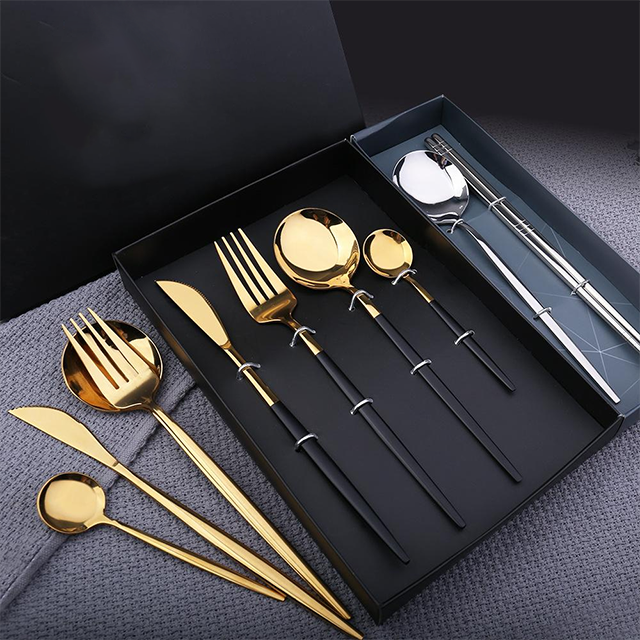
Inherent, Fade-Free Color: Unlike paints or plated layers that can wear off, the colors in PVD—from classic gold and rose gold to sophisticated black—are created by reacting the metal vapor with gases like nitrogen. The color is part of the coating's structure, making it extremely durable and resistant to fading.
Eco-Conscious Process: As a dry, vacuum-based process, PVD coating avoids the toxic chemicals and hazardous waste associated with traditional electroplating, aligning with sustainable manufacturing values.
The consistency and quality of these coatings depend on cutting-edge Coating Equipment. Modern systems like the versatile PVD Multiarc Ion Sputtering Coating Machine integrate multiple technologies (arc evaporation and magnetron sputtering) in one chamber, allowing for the creation of complex, multi-layer coatings with tailored properties. For specialized applications requiring extreme uniformity or high deposition rates, manufacturers may opt for advanced configurations such as the GD Large Multiarc Ion Sputtering Machine or the TG Multiarc Ion Sputtering Machine. These industrial workhorses enable the precise, large-scale production required to meet the growing demand from the culinary sector.
The move to PVD is more than a technical upgrade; it's a response to a clear market evolution. Major cookware companies are actively investing in PVD R&D. For instance, the ANTI-TACH project, involving Tefal, was dedicated to developing multifunctional, nano-structured PVD coatings for cookware that are hard, easy-to-clean, and stain-resistant. In manufacturing hubs like China, the adoption of PVD lines has been shown to increase product value by over 30%, proving its commercial as well as functional worth.
For the discerning chef and consumer, the choice is becoming clearer. The investment in PVD-coated kitchenware is an investment in longevity, performance, and sustained aesthetics. As the technology advances, driven by increasingly sophisticated Coating Equipment, the next generation of kitchen tools will not only work better but will also endure, gracefully withstanding the rigorous tests of time, taste, and temperature.


Let's get in touch.
About Us
Related Products List
Contact Us

Send Inquiry
Privacy statement: Your privacy is very important to Us. Our company promises not to disclose your personal information to any external company with out your explicit permission.
Fill in more information so that we can get in touch with you faster
Privacy statement: Your privacy is very important to Us. Our company promises not to disclose your personal information to any external company with out your explicit permission.