
Send Message
Privacy statement: Your privacy is very important to Us. Our company promises not to disclose your personal information to any external company with out your explicit permission.
Select Language

It is an integrated coating system that creates and controls the conditions required for physical vapor deposition.
Depending on the machine configuration, the system performs functions such as:
The objective is to create a controlled environment in which material can be transferred from a solid source onto the surface of a product.
Because different products require different coatings and production conditions, PVD Coating Equipment is not universally one-size-fits-all.
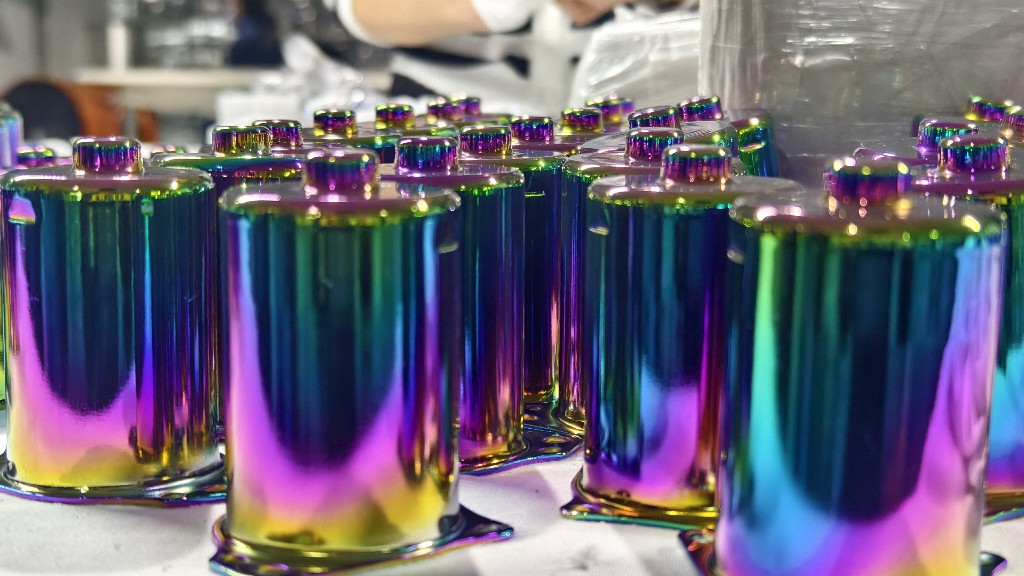
Although the exact process depends on the deposition technology, an industrial coating cycle generally follows several stages.
Components are cleaned and prepared before entering the coating chamber.
Oil, dust, polishing residue and other contaminants can interfere with the coating process. Decorative components may also require polishing, brushing or another surface-finishing process before PVD deposition.
The quality of the starting surface is particularly important because a thin deposited coating does not automatically remove defects from the substrate.
Prepared products are installed onto fixtures inside the chamber.
Fixture design depends on factors such as:
Depending on the equipment configuration, fixtures may rotate during processing.
The chamber is closed and the vacuum system establishes the controlled low-pressure environment required for the coating process.
The required conditions vary according to the PVD process and coating system. Therefore, there is no single vacuum value that should be treated as correct for every PVD coating machine.
Depending on the process, additional in-chamber surface conditioning may be performed before deposition.
This stage is determined by the substrate and coating requirements.
The machine then uses its deposition sources to generate material from a solid cathode or target.
This is where different PVD machine technologies become important.
The generated material travels through the controlled chamber environment and reaches the substrate.
Over the deposition cycle, a thin film forms on the workpiece.
The final result depends on the complete combination of substrate preparation, deposition technology, coating material, process conditions, fixture arrangement and equipment configuration.
A PVD coating machine typically combines several functional systems.
The vacuum chamber contains the products and provides the controlled environment in which deposition takes place.
Its appropriate dimensions and internal arrangement depend on the products being processed.
The vacuum system establishes and maintains the required low-pressure conditions during different stages of operation.
These generate the material used to form the coating.
Their design depends on the PVD technology being used.
For example, an arc-based system uses arc sources, while a Magnetron Sputtering System uses sputtering targets and magnetron sources.
Fixtures hold the products inside the chamber.
Their design can significantly affect loading efficiency and how components are exposed to the deposition sources.
Depending on the coating process, the equipment controls process gases and electrical conditions required during operation.
The control system coordinates the machine sequence and operating conditions.
The exact architecture varies according to the equipment and intended application.
One common mistake when researching PVD equipment is assuming that all PVD machines use the same deposition method.
They do not.
Multi-arc equipment uses arc sources to generate coating material.
This technology is used in various decorative and functional coating applications and can be configured according to different products and production requirements.
Magnetron sputtering uses energetic ions to eject atoms from a target material. These atoms then participate in the deposition process and form a film on the substrate.
Both technologies belong to the PVD family, but their working principles and process characteristics are different.
Therefore, buyers should not choose between them simply by comparing machine names or prices.
The decision should begin with:
What product needs to be coated, and what coating result is required?
Industrial PVD equipment is used across many manufacturing sectors.
Applications relevant to DESION's equipment portfolio include:
PVD equipment can be used for decorative surface treatment of various stainless-steel products.
Applications can include faucets, sanitary fittings, sinks and other hardware components.
Door handles and furniture hardware are common examples of products where decorative surface appearance is important.
PVD technology is also used for decorative finishes on suitable watch and jewelry components.
Functional PVD processes are used in tool and mold applications where the coating is selected according to specific surface-performance requirements.
Specialized vacuum coating equipment can also be configured for certain ceramic, tile and glass applications.
The equipment required for these industries is not necessarily identical. Product dimensions, substrates, coating objectives and production requirements need to be evaluated individually.
This is an important purchasing question, but product dimensions alone are not enough to determine machine size.
A buyer should consider:
For example, two manufacturers may coat similarly sized components but have very different production quantities and loading requirements.
The appropriate chamber and fixture configuration could therefore be different.
This is why buyers should provide actual product information when requesting an equipment recommendation.
Before comparing machine models, define the production project.
Start with these questions:
Provide product photos, dimensions and geometry where possible.
Different substrates can require different preparation and process considerations.
Specify whether the objective is decorative, functional or both, and describe the required finish or coating system as clearly as possible.
The equipment configuration should support realistic production requirements rather than simply accommodate one sample product.
Multi-arc ion coating and magnetron sputtering should be evaluated according to the application rather than treated as interchangeable technologies.
For a new PVD production line, equipment is only part of the project.
Buyers should also discuss:
Instead of sending only:
“Please quote one PVD coating machine.”
provide practical project information.
A useful inquiry should include:
This allows the equipment manufacturer to understand the application before recommending a configuration.
A useful PVD equipment quotation starts with the product and coating requirement—not just a machine model.
GUANGDONG DESION TECHNOLOGY CO., LTD provides coating equipment covering technologies and applications including multi-arc ion coating, magnetron sputtering, hardware decorative coating, glass and ceramic applications and other vacuum coating fields.
DESION's current equipment portfolio includes multi-arc ion sputtering machines, magnetron ion sputtering equipment, large multi-arc systems and other application-oriented vacuum coating equipment.
According to DESION's published company information, its service system also covers technical support, installation training, after-sales service and equipment recommendations based on customer production requirements.
For buyers, this means the first step should be to define the coating project clearly so that the relevant equipment configuration can be evaluated.
A PVD coating machine is an integrated vacuum deposition system designed to apply thin films to prepared substrates.
However, not every PVD machine is designed for the same job.
The correct equipment depends on:
Product → Substrate → Coating Requirement → PVD Process → Product Size → Production Requirement
For industrial buyers, understanding these factors before comparing suppliers can significantly improve the equipment-selection process.
A PVD coating machine creates a controlled vacuum environment and deposits material from a solid source onto prepared components to form a thin film.
Not always. Vacuum coating is a broader category. PVD equipment is one type of vacuum coating equipment based on Physical Vapor Deposition processes.
No. Machines can differ in deposition technology, source configuration, chamber arrangement, fixtures and intended applications.
Applications include suitable stainless-steel products, hardware, sanitary ware, kitchen products, watches, jewelry, tools, molds, ceramics and other industrial components.
The choice depends on the substrate, required coating, product geometry and production objective. The two technologies should not be selected solely on machine price.
Buyers should provide product photos, substrate material, dimensions, coating requirements and expected production volume so that the supplier can evaluate an appropriate configuration.


Let's get in touch.
About Us
Related Products List
Contact Us

Send Inquiry
Privacy statement: Your privacy is very important to Us. Our company promises not to disclose your personal information to any external company with out your explicit permission.
Fill in more information so that we can get in touch with you faster
Privacy statement: Your privacy is very important to Us. Our company promises not to disclose your personal information to any external company with out your explicit permission.